FIND OUT MORE
The TaPRA Outstanding Research Contribution Prize
This prize is for exceptional research and is made to a distinguished scholar of international standing who has made a significant contribution to the development of theatre and performance as a scholarly field through a body of work.


PRIZES
2026
WINNER
Ian Rafael Ramirez
‘“That Performance Was Not for You to Begin With” Performing Queer Worship as Resistance in the Philippines’
“That Performance Was Not for You to Begin With”: Performing Queer Worship as Resistance in the Philippines makes an original and significant contribution to theatre and performance studies. It brings queer performance, religiosity and necropolitics together through a richly situated ethnographic account, lifting the cover off a community that is little known beyond its own boundaries. The work is lucid, self-reflexive and clear in its intent, and its handling of positionality, with a keen awareness of both its strengths and limitations, is exceptionally well contextualised. Theoretically rigorous, it draws effectively on performance studies, queer theory and decolonial scholarship, while close attention to the sensorial dimensions of performance allows embodied experience to emerge alongside theoretical reflection. The concept of kanalization offers a compelling framework for rethinking queer worship and resistance. The breadth and depth of its referencing show theatre and performance as both shaped by and shaping wider society, and its palpable yet carefully managed anger gives the work an activist force. That force extends its insights beyond the Philippines, illuminating how marginalised groups continue to be ostracised in an increasingly polarised world. By moving discussions of queer performance beyond secular frameworks and foregrounding Global South perspectives, the article articulates worship as performative resistance and opens productive avenues for future research on religion, affect, performance and queer world-making in marginalised contexts.
SPECIAL MENTION
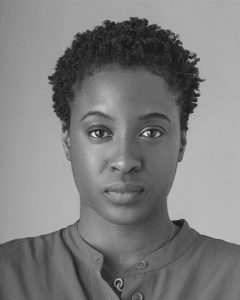
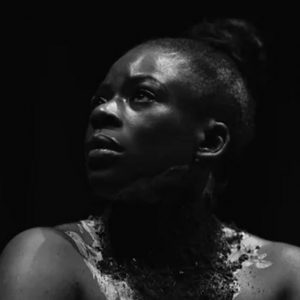
Melissa Blanco Borelli, Esmee West-Agboola, and Mojisola Adebayo
‘Letters’
PRIZES
2025
JOINT WINNERS
Vanessa Damilola Macaulay
‘No safe place: Black women, state violence and Black cultural production’
This is an original, powerful work on Mojisola Adebayo’s The Interrogation of Sandra Bland and the AI chatbot Sandy Speaks that demonstrates the complex intersectional links between feminism, state violence, and technology. Macaulay’s article offers a timely reframing of performance through the lens of Black women’s dual positionality, as both observers and objects of state violence. Her concept of “no safe place” serves as a radical starting point for understanding Black cultural production as creation forged within danger. The article weaves together theatre, artificial intelligence, digital media, and activism, drawing from diverse forms to offer an insightful analysis of performance as survival, testimony, resistance, imagination, and a site of epistemological transformation.
Tia-Monique Uzor
‘Tidalectic Un/mapping and the Performance of African Diasporic Imagination in the Repertory of Katherine Dunham’
This essay, which sheds light on the Brazil-inspired choreographic works of Katherine Dunham through digital tools and Kamau E. Brathwaite’s concept of “Tidalectics” is rigorously developed and persuasively argued. It brings attention to Dunham’s Brazil-inspired choreography, a part of her repertory that has received little critical attention compared to her more widely studied Caribbean works. Extending Brathwaite’s concept of Tidalectics beyond its original framing, Uzor explores how imagination works as a creative and political tool in African diasporic dance. By combining digital data sets and archival materials from the Dunham’s Data project, Uzor revisits Dunham’s choreographic process as a deeply imaginative response to histories of displacement and erasure. Uzor’s integration of digital humanities methods with Black Caribbean theory offers a compelling model for future research, one that is both historically grounded and methodologically expansive. It could also serve as a good pedagogical example of how to integrate digital tools, theory, and performance analysis in the classroom, and open up new pathways for teaching interdisciplinary approaches.
SPECIAL MENTION
Mallarika Sinha Roy
Utpal Dutt and Political Theatre in Postcolonial India.

PRIZES
2023
WINNER
Lynette Leni Goddard
Their sustained focus on gender, sexuality, race and identities on stage has meant a powerful legacy of engaging, politically significant research that influences social and political directions in contemporary theatre scholarship and is widely used in curricula; indeed the focus on Black British theatre as a genre is itself a contribution that has been widely taken up. Modelling anti-racism as a pedagogy and practice, their work reiterates a politics of writing that ensures anti-racist language – e.g. through citational practices that avoid quoting racist language, thus providing models for researching difficult topics without reiterating outdated terminologies. A collaborative scholar, and genuinely engaging leader in theatre and performance studies, Lynette is the outstanding researcher that we nominate as the Performance Identity and Community working group.
NOMINATED
Claire Cochrane
Konstantinos Thomaidis
2022
WINNER
James Thompson
MAKE A
Nomination
Only current TaPRA members can submit nominations for our awards or elections. Each nomination requires a seconder, who must also be a current member.
TaPRA 2026 at QMUL
Our 2026 conference will be hosted in partnership with the Queen Mary University London, 2–4 September 2026
TaPRA 2026 at QMUL
Our 2026 conference will be hosted in partnership with the Queen Mary University London, 2–4 September 2026